Slave Bangles: The History and Beauty of Hand Jewellery
Slave bangles are one of the more unusual forms of hand jewellery, creating a decorative connection between a finger ring and a bracelet worn around the wrist. A chain runs across the back of the hand, turning three familiar pieces of jewellery, ring, chain and bangle into one striking design. Today they are worn as statement jewellery. Variations of this style of hand adornment have been seen in different cultures and traditions for generations.
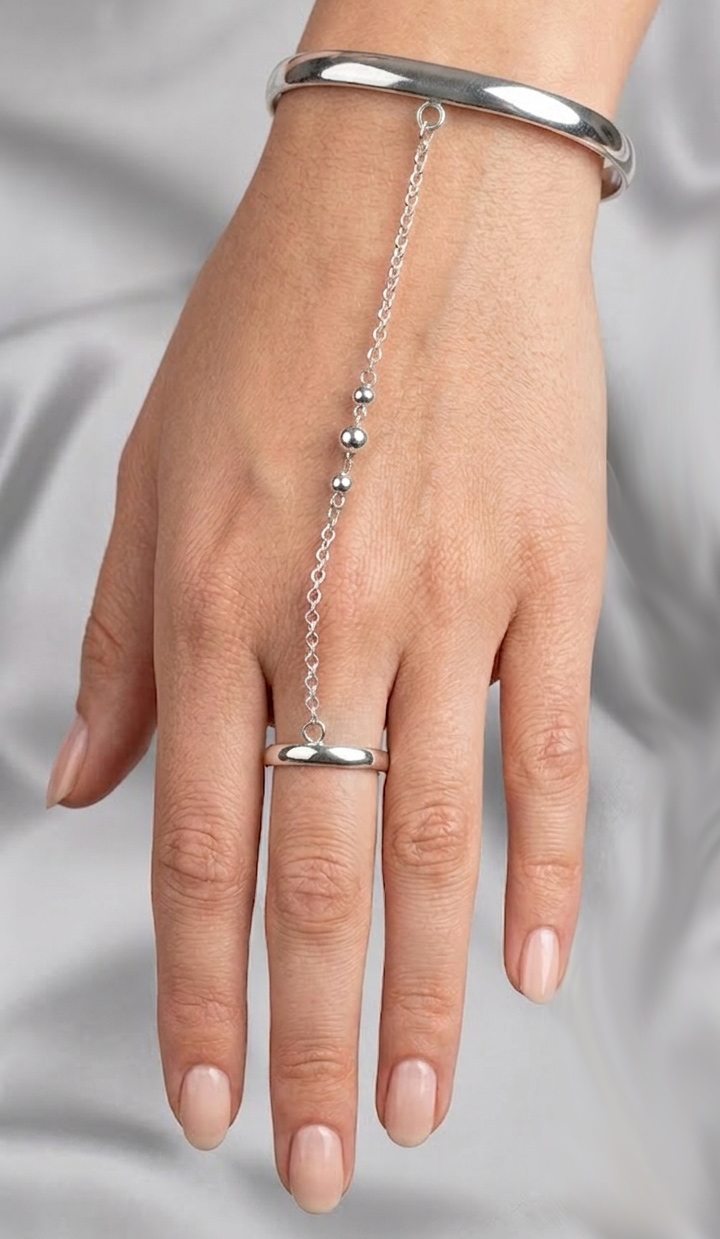
Modern Slave Bangle.
An Ancient Form of Hand Jewellery
The Hath Phool – The “Flower of the Hand”
This jewellery dates back to the 7th or 8th century in India. The name itself is lovely. Haath/hath means “hand” and phool means “flower”, hence “hand flower”. Other names developed in different regions, including hath panja, panja and haath kamal. The basic idea remained the same. Instead of decorating only the wrist or finger, the jewellery turned the whole back of the hand into an ornamental space. How beautiful.
Whatever name is used, it is the beautiful line of jewellery travelling from the wrist towards the fingers that gives these pieces their distinctive appearance.
Traditional versions can be wonderfully ornate, sometimes incorporating several finger rings, chains, gemstones and detailed metalwork. Modern interpretations range from elaborate bridal jewellery to much simpler designs that can be worn with everyday clothing.

Original Slave Bangle from India from the 18th–19th century
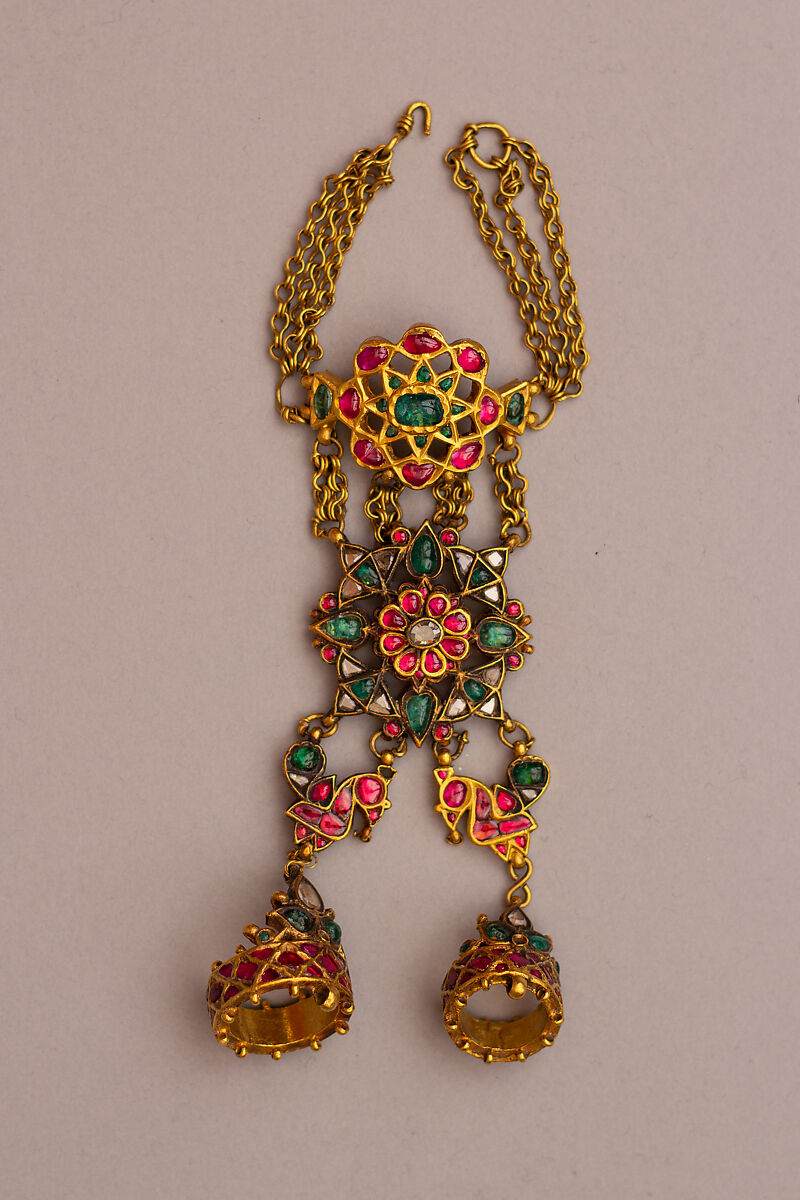
Original Slave Bangle from India in its full glory. Emeralds, Rubies and Gold.
How did we get the name Slave Bracelet?
The name “slave bangle” or “slave bracelet” has long been used in Western jewellery to describe this interconnected style. One possible explanation for the name “slave bracelet” comes from the design itself: the finger ring and wrist bracelet are physically joined by a chain, so the ring could be thought of as being “enslaved” or tethered to the bracelet at the wrist. It is an easy way to understand how the term may have developed. The precise modern western historical origin of the name is uncertain.The terminology can vary considerably depending on the design and its cultural influence.
Tradition meets Modern Slave Bangles
One reason slave bangles remain so appealing is the way they decorate an area of the body that conventional bracelets and rings treat separately. A fine chain following the natural line of the hand draws attention to the fingers and wrist without requiring a piercing. Designs can be delicate and understated or much more elaborate, depending on the metalwork, chains, stones and number of rings used.
At Hidden Delites, our interpretation is handcrafted in solid 92.5% silver. The design has an adjustable finger ring connected by a silver chain to an adjustable wrist bangle, allowing both parts to be gently shaped for a comfortable fit. Rather than being mass produced, each piece is individually handmade by a silversmith. The simplicity of polished silver allows the shape of the jewellery and the way it follows the hand to become the main feature.

From Traditional Jewellery to Western Fashion
Slave bangles can be worn with evening clothes, festival outfits, alternative fashion or simply as an unusual piece of jewellery with an otherwise simple outfit. They can also make an interesting gift for someone who prefers jewellery that is a little different from conventional rings and bracelets. Whether you call them slave bangles, hand bracelets, hand flowers or Panja jewellery, their enduring appeal comes from the same idea: transforming the whole hand into a place for jewellery and decoration.
Hidden Delites has been making custom handmade women’s body jewellery since 2001.